

Clark: From Corporate Expat to Mugairyu Iaido Master
Throughout the years of living in Japan, we often see many passerbys from abroad who come to Tokyo for a few years for work and then leave. However, there are also those who choose to stay and integrate themselves into Japanese culture through means beyond their professional careers.
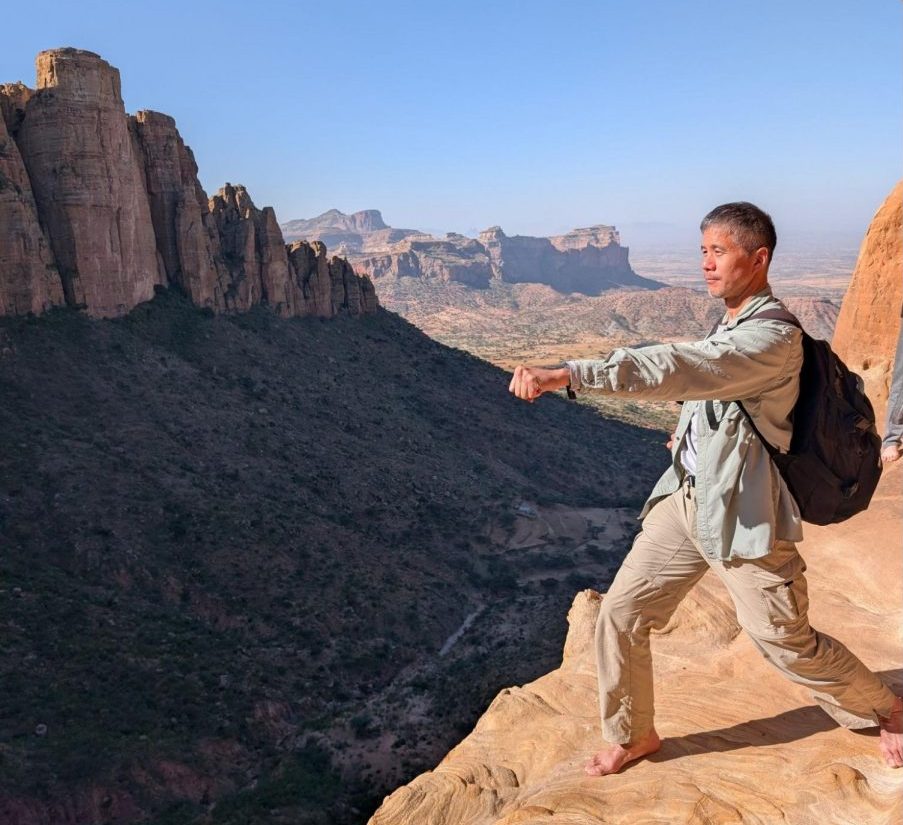
I first met Clark through a mutual friend. I learned that he was born in the US and moved to Japan after a career path that took him through several countries. When he retired early, rather than returning home, Clark chose to remain in Japan to devote most of his time to chasing his passion: Japanese Iaidō.
The Opportunity to Come to Tokyo
Clark’s two great passions in life are martial arts and travel. Ever since he began studying Shotokan Karate during university years, he had hoped for an opportunity to live in Tokyo to experience the local life and study martial arts. After graduating and working for a few years, he transitioned to the pharmaceutical industry. An opportunity arose when he was appointed to manage the company’s Asian operations, leading him to move to East Asia. After living in China for several years, He seized the internal transfer opportunity to manage broader Asia-Pacific region and moved to Tokyo 12 years ago.
Encountering Mugai-ryu Iaido
After arriving in Japan, Clark continued his training in Shotokan Karate. Later, introduced by a friend, he began practicing Kendo. After four years of Kendo training, another martial arts friend in Japan introduce to him to Mugai-ryu Iaido.
Unlike Kendo, which uses bamboo swords (shinai) for training, Mugai-ryu is a “Koryu” (ancient school) swordsmanship discipline with a 400-year history. It emphasizes the combination of practical combat and spiritual cultivation. Its training system primarily consists of three pillars:
- Kata: Practice of pre-arranged forms simulating real combat.
- Kenjutsu (Kumitachi): Paired practice focusing on offensive and defensive techniques.
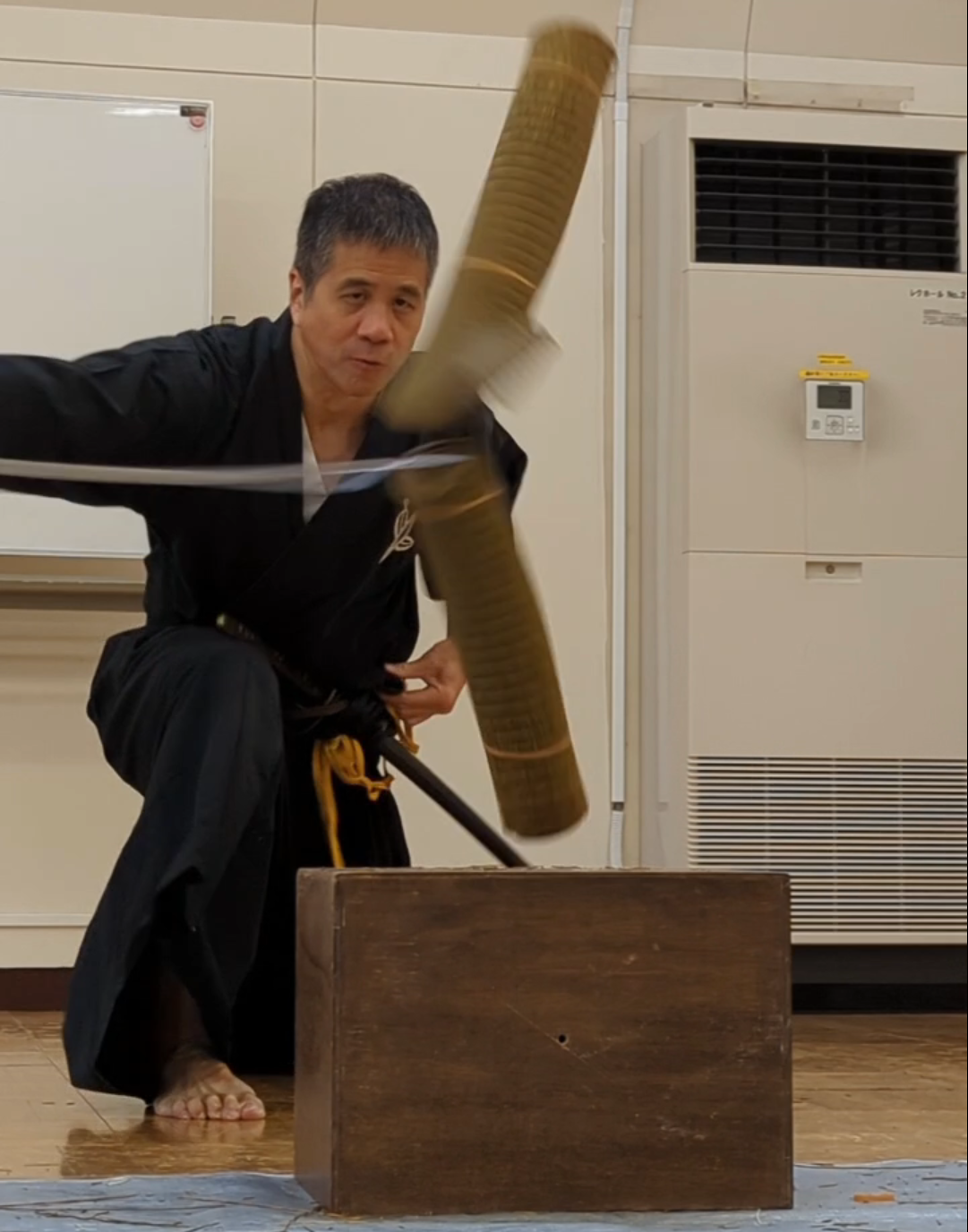
- Tameshigiri: Using a live blade to cut through straw mats (tatami omote) to verify the angle of the blade (hasuji) and the application of power.
Beyond honing sword techniques, Mugai-ryu emphasizes the development of psychological resilience, seeking to maintain absolute balance of mind and body under high-pressure situations.
Becoming a Foreign-born “Shihan” (Master)
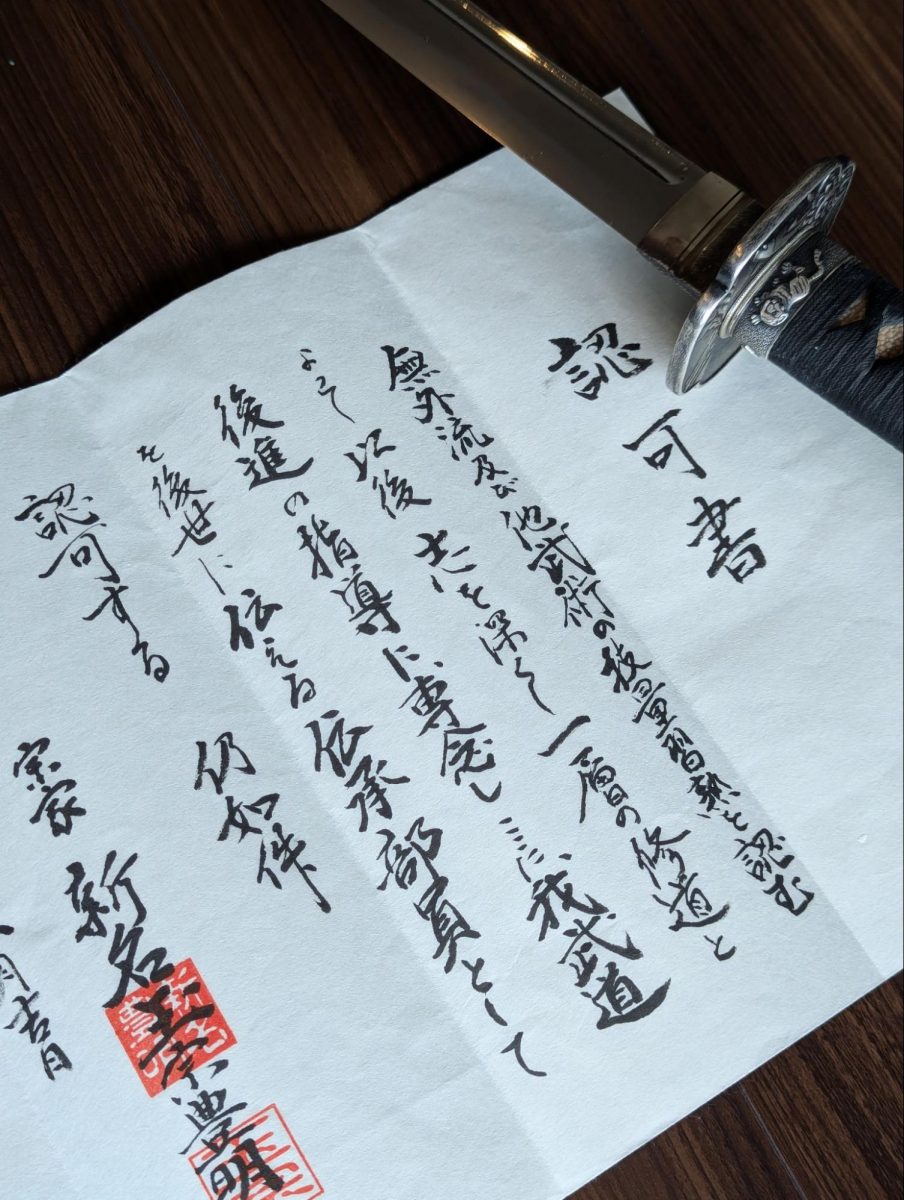
Although there are many Mugai-ryu dojos overseas, foreign-born Masters (Shihan) remain quite rare within Japan. The reasons behind this include the language barrier and the fact that even in Japan, Iaido is less known to compared to other martial arts disciplines.
Even though Clark’s Japanese level is conversational, he still faced certain challenges in training. Fortunately, he met a foreign instructor with a similar background with whom he could practice and exchange ideas, which proved to be a great help.
After years of dedicated practice and reaching sufficient standards in all three pillars of Mugai-ryu, Clark was officially promoted to Shihan. He also became one of only eight members in the school’s “Denshobu” (the department dedicated to passing down the tradition), shouldering the heavy responsibility of preserving and teaching Mugai-ryu.
Specifically, his role covers several key aspects:
- Assisting the Mugai-ryu Grandmaster (Soke) and providing daily instruction.
- Acting as a bridge for overseas students.
- Planning the blueprint for future promotion and expansion.
Martial Arts’ Positive Impact on Life
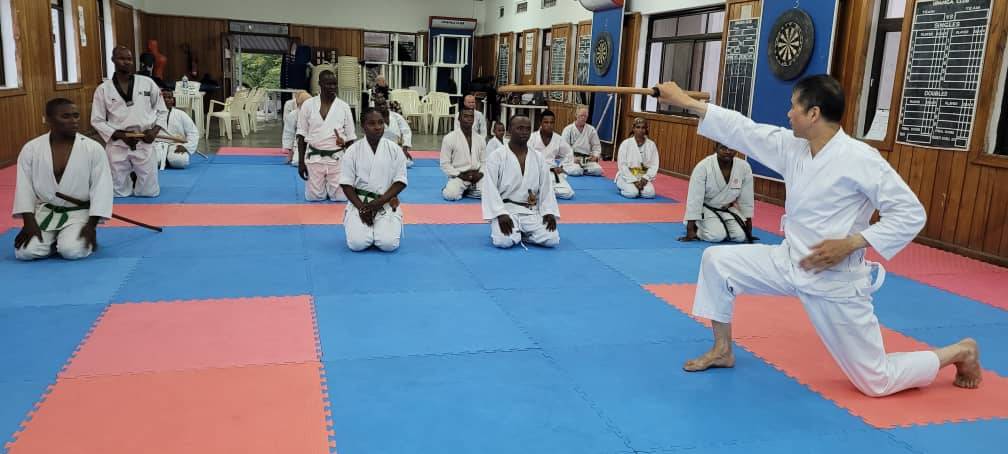
Clark believes that the greatest benefit of practicing martial arts—from Karate to Iaido—has been the building of self-confidence. Starting from being a complete novice, and then, through consistently devoting time and energy, acquiring skills step-by-step, people can gradually internalize this process into self-assurance. This mindset helps Clark not only martial arts training but also is applicable to other facets of life, leading him to embrace various adventures in both work and life.
Furthermore, he has built many personal connections through martial arts. When traveling around the world, he would visit local dojos, allowing him to meet new local friends in addition to training. The Japanese friend who later introduced him to Iaido even served as his guarantor for the Japanese permanent residency application.
Another unexpected benefit was that, while working in Japan, his martial art training gave him a broad understanding and respect for traditional Japanese culture. When interacting with Japanese business partners, they were often pleasantly surprised to find that he understood cultural nuances—such as how to bow correctly or sit in kneeling position (seiza). These seemingly small etiquettes often effectively broke down communication barriers and smoothed business engagements.
Future Plans
A few years ago, Clark decided to leave the corporate system to become a freelancer. Now, he divides his time between tutoring international students in English and Math, traveling, and his most passionate pursuit—promoting Mugai-ryu Iaidō.
Despite Mugai-ryu being an koryu style with seemingly heavy traditions, it actually maintains a welcoming and open attitude toward anyone who wishes to learn. Regardless of nationality, social status, or physical disability, anyone with the heart to learn is welcome. Training can be adjusted to suit a student’s physical condition. The current Grandmaster of Mugai-ryu, Niina-Soke, once even designed a specific training style for a student who could not train with her right hand due to disabilities.
Carrying on this spirit, Clark’s current goal is to open the doors of Iaido to the foreign communities in Tokyo. He has already started English Iaido classes at his Tokyo dojo and is actively preparing promotional activities
In addition to his martial arts research, he has also obtained certification as an International Sake Sommelier (Kikisake-shi), fully enjoying his life in Tokyo. Moving from a “nomadic” career where he moved every four years, to now being settled in Tokyo for over 12 years, Clark has proven in his own way: as long as you find your own passion and connection, foreigners can also find their own senses of belonging and settling down in this busy city.
Mugai-ryu Iaido Information
http://mugairyu-international.com/mugai-ryu (English)
https://www.mugai.or.jp/ (Japanese)
https://www.instagram.com/tokyo.international.kenjutsu/ (Instagram)
Clark’s Lesson
https://www.meieikan.com/home-7
(中文) 從外派菁英到古武道傳承者 – 無外流居合道師範的 Clark
(日本語) エリート駐在員から古武道の伝承者へ:無外流居合道 師範・CLARKさん

Mark Chih
Latest posts by Mark Chih (see all)
- 東京升學的分流地圖:四個家庭的真實選擇 - 2026-07-22
- Clark: From Corporate Expat to Mugairyu Iaido Master - 2026-01-30
- 從外派菁英到古武道傳承者 – 無外流居合道師範的 Clark - 2026-01-29


Pingback:從外派菁英到古武道傳承者 – 無外流居合道師範的 Clark | 日本職活 Worklife in Japan
2026-02-03 at 00:44:44Pingback:エリート駐在員から古武道の伝承者へ:無外流居合道 師範・CLARKさん | 日本職活 Worklife in Japan
2026-02-03 at 13:54:32